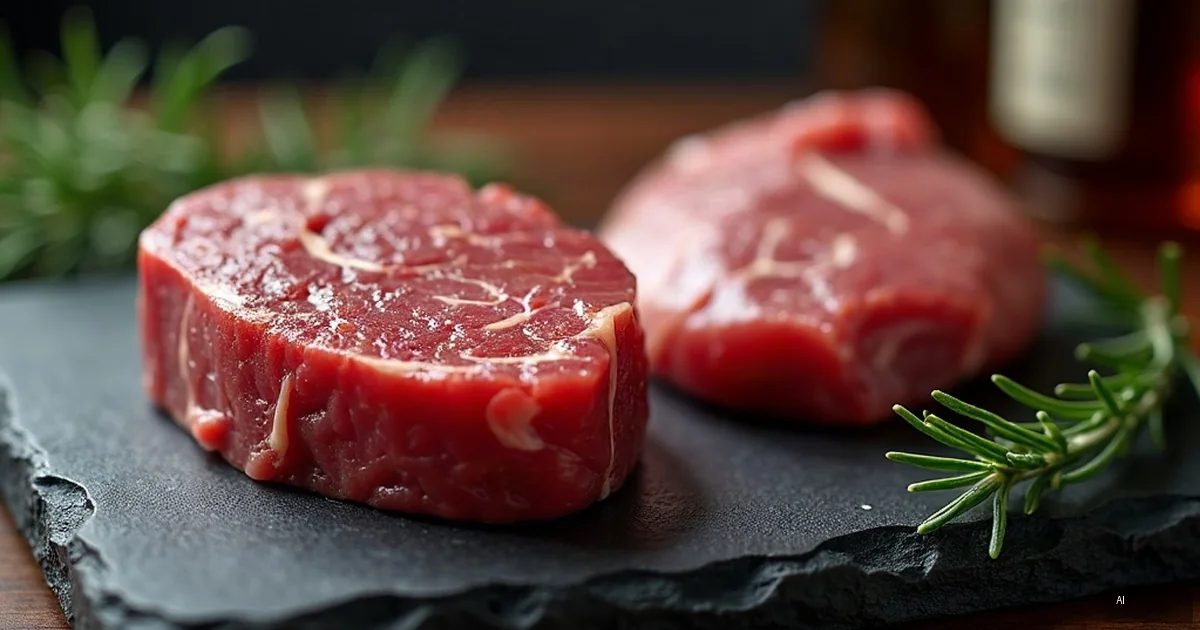
📊 Nutritional Table (100 g)
Below is the detailed nutritional value per 100 grams beef steak.
| Nutrient | Amount (100 g) | % RDA |
|---|---|---|
| 🔥 Calories (Energy) | 270 kcal | -- |
| 💪 Protein | 28.0 g | -- |
| 🧈 Fats | 18.0 g | -- |
| 🍚 Carbohydrates | 0 g | -- |
| 🌾 Fiber | 0 g | -- |
| Iron | 3.0 mg | 17% |
| Zinc | 6.0 mg | 55% |
| Vitamin B12 | 3.0 µg | 125% |
| Creatine | ~0.5 g | -- |
| Selenium | 30 µg | 55% |
* RDA - Recommended Daily Allowance (EU Regulation 1169/2011). Percentages are calculated for an adult. Athletes' needs may be higher.
💪 Benefits for Athletes
Here are the main beef steak benefits in an athlete's nutrition:
- Highest creatine content from meat - increases explosive power
- High-quality protein with an excellent amino acid profile
- Rich in iron and B12 - protects against sports anemia
- Thermic effect - digesting protein burns 20-30% of its calories
🍳 How to Prepare
The best ways to prepare beef steak, while preserving maximum nutritional value:
- In a pan: remove from the fridge 30 min before, cook over max heat for 3-5 min
- Reverse sear: in the oven at 120 °C until 50 °C, then in a hot pan for 1 min
- Sous vide: 55 °C (medium-rare), 1-2 h, then sear quickly
⚡ When to Eat?
After training or on a rest day. Never before training - takes 4+ h to digest.
🔄 Substitutions and Alternatives
Best alternatives beef steak:
Beef tenderloin, lamb steak, bison steak, portobello mushrooms
💡 Tips
- Choose Ribeye or Sirloin - the best balance of flavor and tenderness
- After cooking, let it rest for 5-7 min - the juices redistribute
- Meat thermometer: 52 °C=rare, 57 °C=medium-rare, 63 °C=medium
- Just salt and pepper - a quality steak needs nothing more
Nutritional Value at a Glance
Beef steak — a concentrated source of protein and micronutrients. It is rich in iron, zinc and B-group vitamins, with virtually no carbohydrates. Part of the fat depends on the cut: leaner cuts have less fat, while marbled ones — more flavor but also more calories. Due to its dense nutritional value, even a small portion provides a lot of beneficial nutrients.
What Beef Steak Offers an Athlete
- Protein — a complete amino acid profile for muscle recovery.
- Iron — important for oxygen transport in the blood; its deficiency leads to fatigue.
- Zinc — participates in recovery and immune system processes.
- Creatine — meat naturally contains a small amount of it, beneficial for strength training.
Because of these properties, beef is often considered one of the most valuable red meat choices for athletes. Compare with pork tenderloin or chicken breast.
How to Combine It in Your Diet
Beef is best eaten with vegetables and whole-grain products: this way, fiber and vitamins complement the protein. Due to its higher fat content, steak takes longer to digest, so it is suitable for rest days or meals when there is plenty of time until training. Choose the portion according to your daily protein goal, not your appetite. Cook in moderation and avoid burnt spots, which may contain harmful compounds.
What to Watch Out For
- Cut — leaner cuts have less fat; fattier ones — more flavor.
- Grade — it determines not only the taste but also the nutritional composition.
- Preparation — briefly cooked over high heat preserves juiciness.
- Frequency — red meat is worth alternating with fish and poultry for variety.
More types of meat — meat products for sports and lamb.
Most Common Mistakes
- Too Large a Portion — a fattier steak quickly exceeds the daily fat allowance, so weighing helps.
- Charring — heavily burnt spots contain harmful compounds, so cook over medium heat.
- Meat Only — a diet without vegetables and carbohydrates is not balanced, no matter how high-quality the meat.
- Daily Consumption — red meat is worth alternating with fish, poultry and plant proteins to keep the diet varied.
When Is the Best Time to Eat It
Because it takes longer to digest, beef steak is best eaten when there are at least a few hours left until training, or on rest days. After training, a more convenient choice is a faster-absorbing protein source. For dinner, steak is suitable if you do not feel heaviness in your stomach at night. What matters most is not the specific time but the total daily protein and calorie intake. When included in a balanced plan, steak becomes not only a tasty but also a valuable nutritional element.
Quality meat in moderation — an excellent foundation for both sports performance and overall well-being.