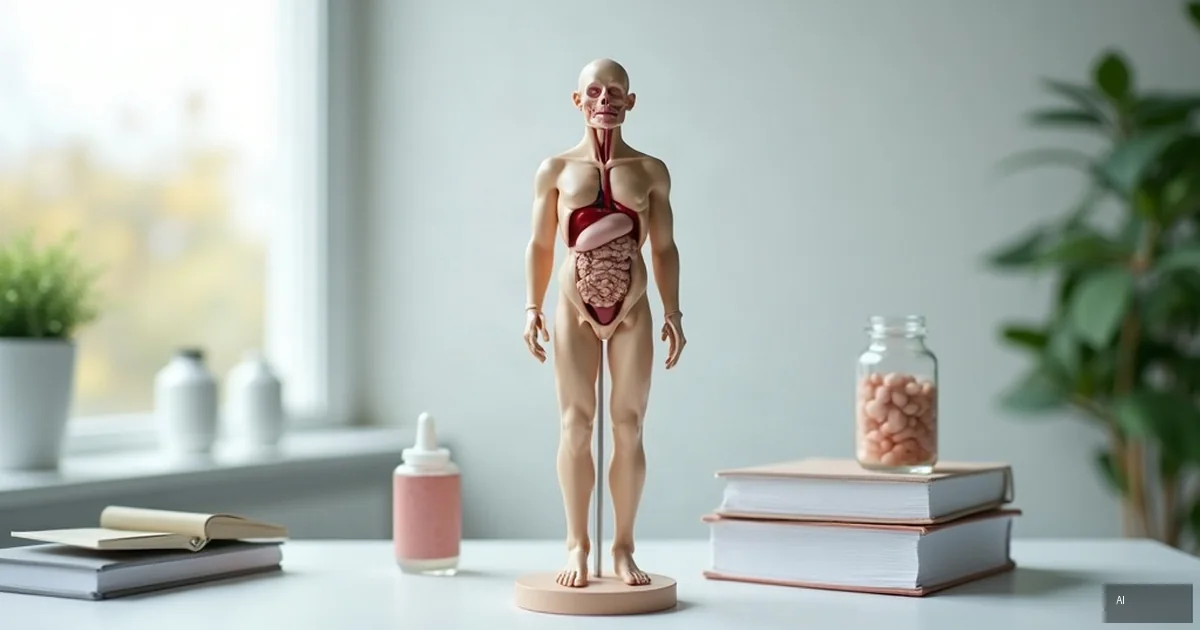
🔬 Types and Mechanisms of Autophagy
Autophagy (Greek “self-eating”) is an evolutionarily conserved cellular process in which damaged organelles, protein aggregates, and other cellular components are degraded in lysosomes. It is the cell’s “quality control” system.
Macroautophagy
The main type. Cytoplasmic contents are enclosed by a double membrane (autophagosome), which fuses with a lysosome (autophagolysosome), where the contents are digested.
Microautophagy
The lysosomal membrane directly invaginates and “swallows” cytoplasmic contents. Important for continuous organelle turnover. Less studied than macroautophagy.
Chaperone-Mediated Autophagy (CMA)
Specific proteins with the KFERQ motif are recognized by the Hsc70 chaperone and transported to the lysosome via the LAMP-2A receptor. A highly selective process.
Mitophagy
Specific autophagy of damaged mitochondria. Regulated by the PINK1/Parkin pathway. Critically important for cellular health — damaged mitochondria are a source of ROS.
📊 Autophagy Regulation
| Regulator | Effect on Autophagy | Mechanism | Context |
|---|---|---|---|
| mTORC1 | Inhibits (phosphorylates ULK1 Ser757) | During nutrient abundance | During eating, autophagy is “switched off” |
| AMPK | Activates (phosphorylates ULK1 Ser317/Ser777) | Energy deficit | Autophagy is activated during exercise |
| Fasting | Strongly activates | AMPK↑ + mTOR↓ = ULK1 activation | Peak autophagy after 24–48 h of fasting |
| Physical exertion | Activates in muscle | AMPK↑, Ca²⁺ signaling | Especially in long endurance training sessions |
| Insulin/IGF-1 | Inhibits | PI3K/Akt → mTORC1 activation | Anabolic signal inhibits autophagy |
| Resveratrol | Activates | SIRT1 → deacetylates ATG proteins | Caloric restriction mimetic |
🏃 Autophagy in Sport
Physical exercise is one of the strongest physiological stimulators of autophagy:
- Acute exercise: A single endurance training session induces changes in autophagy markers (LC3-II, p62) within 1–6 h after exercise
- Long-term adaptation: Regular training improves autophagy efficiency — faster removal of damaged components
- Overtraining: Paradoxically, excessive load can cause excessive autophagy, leading to muscle atrophy
- Nutrition window: Protein and carbohydrates after exercise “switch off” autophagy via mTOR. This is normal — a balance is needed between clearance and growth
- Intermittent fasting: 16/8 fasting protocol + fasted training — a synergistic effect on autophagy
🏆 Athlete's Nutrition and Recovery Guide
Key Nutrition Principles:
- Protein: 1.6–2.2 g/kg body weight per day for muscle recovery and growth
- Carbohydrates: 5–12 g/kg depending on training intensity — the main energy source
- Fats: 20–35% of daily calories — essential for hormone production and cell membranes
- Hydration: 35–45 ml/kg body weight of water per day + additional during training
- Micronutrients: magnesium, zinc, iron, vitamin D — critically important for athletes
Recovery Protocol:
- Sleep: 7–9 hours of quality sleep — peak growth hormone
- Active Rest: light movement (walking, stretching) between intense workouts
- Massage and Foam Rolling: improves blood circulation, reduces muscle tension
- Contrast Shower: alternating hot/cold water promotes recovery
Post-Workout Nutrition: within 30–60 min. after exercise, consume protein + carbohydrates in a ratio of 1:3–4. This is the so-called “anabolic window”, when muscles most efficiently absorb nutrients.
💊 Sports Supplement Usage Guide
Properly selected sports supplements can significantly improve performance, recovery and overall well-being. Below is a table of the main supplements:
| Supplement | Purpose | Recommended Dose | When to Take |
|---|---|---|---|
| Whey protein | Muscle recovery and growth | 20–40 g after training | After training / between meals |
| Creatine | Increasing strength and explosive power | 5 g per day | At any time, consistently |
| Beta-alanine | Delays muscle fatigue | 3–6 g per day | Pre-Workout |
| Omega-3 | Reducing inflammation, heart health | 1–3 g EPA/DHA | With food |
| Magnesium | Muscle relaxation, sleep | 300–400 mg | In the evening before sleep |
| Vitamin D3 | Bone health, immunity | 2000–4000 IU | With food (in the morning) |
🏥 Sports Injury Prevention
Injury prevention is an integral part of any sports program. Follow these principles:
- Warm-Up: 10–15 min. of dynamic warm-up before every workout
- Stretching: dynamic stretching before training, static — after training
- Progressive Overload: increase the load by no more than 10% per week
- Technique: proper exercise technique is more important than weight
- Proper equipment: condition of footwear, protective gear, and equipment
- Rest: at least 1–2 full rest days per week
- Body Signals: pain is not a sign of weakness, but a signal to stop
🧠 Mental Preparation
Before Competition:
- Visualization: visualize a successful performance — from warm-up to finish
- Routine: establish a consistent pre-competition routine — it reduces anxiety
- Goal Setting: set specific, measurable goals (not just “win”)
During competition:
- Breathing Control: deep diaphragmatic breathing reduces stress and improves concentration
- Present Moment: focus on what you can control now — not on the result
- Positive Self-Talk: change “I can’t” to “I’m ready”
📋 Practical Tips for Athletes
📓 Training Diary
Record not only loads but also subjective feelings: sleep quality, fatigue level, appetite. This helps detect signs of overtraining early.
🩺 Regular Tests
Blood tests 1–2 times per year: complete blood count, ferritin, vitamin D, testosterone/cortisol, thyroid hormones. Prevention is cheaper than treatment.
🔄 Periodization
There is no single perfect training plan for the whole year. Alternate periods of intensity, volume, and specificity. Classic cycle: 3–4 sav. of load increase, 1 sav. of recovery.
🧪 Individualization
What works for an Olympic champion will not necessarily work for you. Genetics, lifestyle, stress, nutrition — everything is individual. Experiment and monitor your body’s response.
Consult a sports medicine physician or a certified coach before starting a new program.
❓ Frequently Asked Questions
Q: Is autophagy always beneficial?
A: Autophagy is cellular “quality control,” but excessive autophagy can cause muscle atrophy (autophagic cell death). For a healthy body, the optimal balance between mTOR (growth) and AMPK/autophagy (cleaning) ensures health. Overtraining can cause excessive autophagy and muscle wasting.
Q: Is mTOR activation necessary for muscle growth?
A: Yes, mTORC1 is the main regulator of protein synthesis. However, continuous mTOR activation is not optimal — periodic mTOR inhibition (through fasting or endurance training) allows autophagy to “clean” the cells. This is one of the reasons a healthy lifestyle requires both anabolic and catabolic periods.
💡 Interesting Facts
- The Human Heart over an average lifespan, contracts about 2.5 billion times and pumps enough blood to fill 100 Olympic swimming pools!
- Muscle Memory is real: muscle cell nuclei acquired through training remain even after a long period of inactivity. This makes it easier to get back into shape.
- In a Single Muscle Contraction millions of ATP molecules participate. Per day, the body produces and uses ~70–100 kg of ATP — more than your body weight!
- Mitochondria have their own separate DNA, inherited only from the mother. They are descendants of ancient bacteria that settled in eukaryotic cells billions of years ago.
- The Liver is the only organ capable of removing lactate from the blood and converting it back into glucose (Cori cycle). During exercise, this process accelerates 5–10 times.
🛒 Sports Supplements for Your Goals
📚 Scientific Sources and Further Reading
The information provided in this tool is based on scientific literature in sports physiology. We recommend the following authoritative sources for further study:
- Journal of Applied Physiology — a leading journal in the field of sports physiology
- Medicine & Science in Sports & Exercise (MSSE) — official ACSM journal
- European Journal of Applied Physiology — European sports science leader
- Sports Medicine — review articles on sports physiology
⚠️ Disclaimer: This information is for educational purposes. For individual health concerns, always consult a sports medicine specialist.