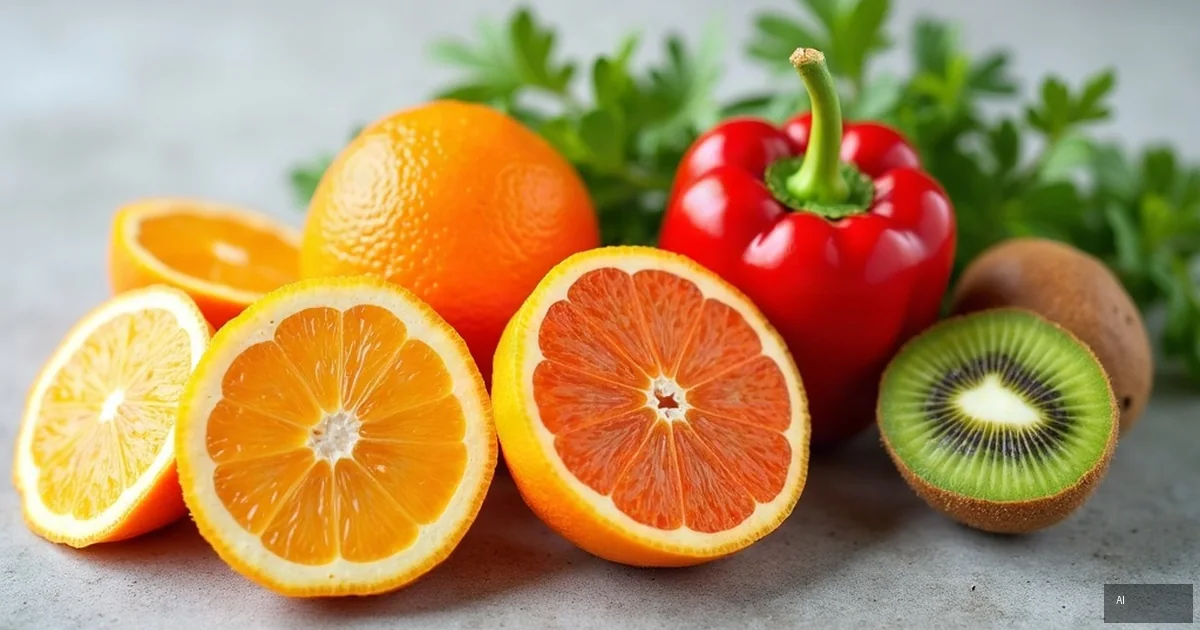
Why Is Vitamin C Important for Athletes?
Vitamin C (ascorbic acid) is a water-soluble vitamin that the body does not produce itself — it must be obtained from food or supplements. For athletes, vitamin C is especially important due to increased oxidative stress caused by intense training.
🛡️ Antioxidant
Neutralizes free radicals, which increase during intense training. Protects muscle cells from oxidative damage.
🔄 Cortisol Reduction
1–1.5 g of vitamin C after training significantly reduces the cortisol spike and accelerates recovery.
💪 Collagen Synthesis
Essential for collagen production — important for joints, tendons, and ligaments. Especially relevant for strength athletes.
🦠 Immunity
Strengthens the immune system. Athletes, especially endurance athletes, have an increased risk of upper respiratory tract infections.
📊 Vitamin C Forms: Which Is Best?
| Form | Advantages | Cons | Bioavailability |
|---|---|---|---|
| Ascorbic acid | Cheapest, most effective, pure form | May irritate the stomach in large doses | High |
| Sodium ascorbate | Gentler on the stomach, buffered | Slightly more expensive, contains sodium | High |
| Calcium ascorbate (Ester-C) | Gentle, with calcium, eliminated more slowly | More expensive, lower C concentration | Medium–High |
| Liposomal Vitamin C | Highest absorption, does not irritate the stomach | Most expensive, limited availability | Very high |
| Natural (acerola, camu camu) | With bioflavonoids, synergy | Low concentration, large capsules | Intermediate |
🍊 Vitamin C Content in Food Products (100 g)
| Product | Vitamin C (mg) | % NRV (90 mg) | Additional benefit |
|---|---|---|---|
| Camu camu (dried) | ~2000–3000 | 2200–3300% | Superfood, but expensive |
| Acerola cherries | ~1677 | 1863% | Natural, with bioflavonoids |
| Red bell pepper (raw material) | ~128–190 | 142–211% | Cheaper option, in Lithuania |
| Blackcurrants | ~181 | 201% | Seasonal, tasty |
| Kiwis | ~93 | 103% | Available all year round |
| Broccoli | ~89 | 99% | And other antioxidants |
| Orange (medium) | ~53 | 59% | Available, inexpensive |
| Lemon | ~53 | 59% | With tea — a tradition! |
| Strawberries | ~59 | 66% | Seasonal |
| Tomato | ~14–23 | 16–26% | Everyday source |
🎯 Vitamin C Doses by Goal
| Goal | Recommended dose | Timing | Duration |
|---|---|---|---|
| General health | 90–200 mg/d | Any time with food | Continuously |
| For athletes (maintenance) | 250–500 mg/d | Split: morning + after training | Continuously |
| Cortisol reduction after training | 1000–1500 mg | Immediately after training | On training days |
| Cold prevention | 500–1000 mg/d | Divided 2–3 times | During the Season |
| Cold treatment | 1000–2000 mg/d | Every 4–6 hours (up to 4000 mg/d) | During illness (3–5 days) |
| Iron absorption improvement | 200–500 mg | Together with iron supplement | As needed |
⚠️ Vitamin C Myth: Can Too Much Harm Adaptation?
Some believe that very large doses of antioxidants (including vitamin C) before training can suppress positive body adaptations to training stress. However, this is relevant only for very large doses (>1 g before training).