📋 Today's Entries
No entries yet. Add your first meal!
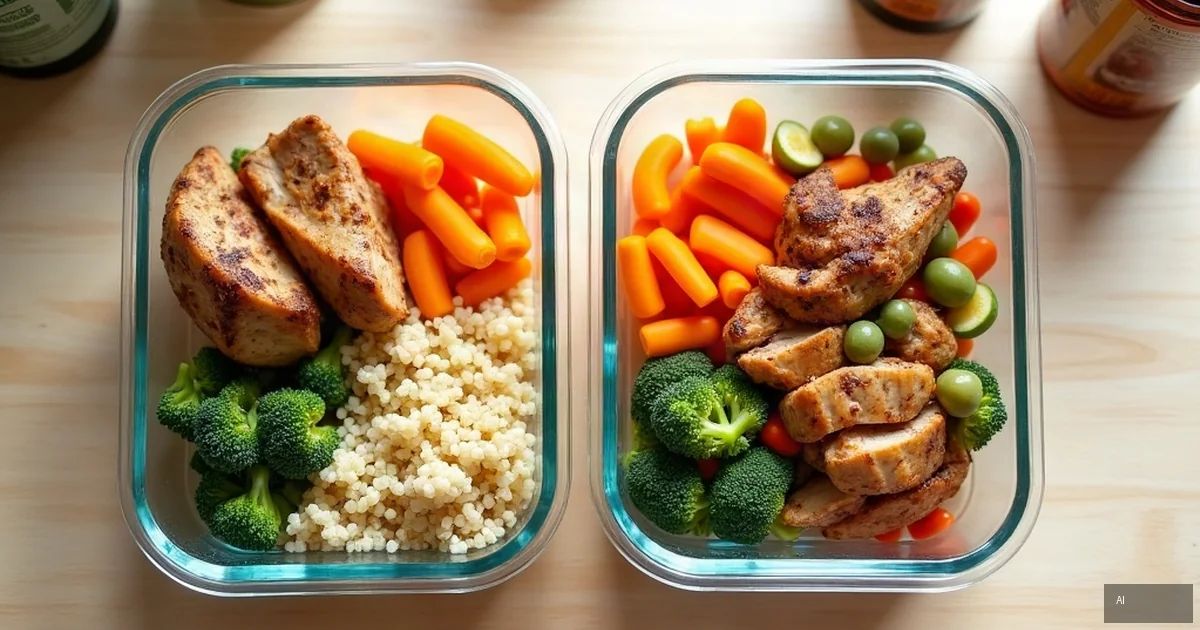
What a Food Diary Is For
A diary is not a “punishment” and not just calorie counting. It reveals what you actually eat (often very different from what you think), at what moments the urge to eat appears, and how you feel after a meal. This is a data-collection stage — before changing habits, it is worth seeing how things are now.
📋 What to Write Down
| Element | Why It Matters |
|---|---|
| Food and Amount | Baseline; amount in grams or household measures (spoon, plate) |
| Time | Shows eating rhythm and long gaps |
| Feeling Before | Hunger, boredom, stress, fatigue |
| Feeling After a Meal | Satiety, heaviness, energy |
| Activity | Whether you ate at the computer, “on the go,” standing |
| Sleep and Load | Explains why hunger was greater on one day |
✅ How to Estimate Portions
- For the first 1–2 weeks: weigh your food until your eye “learns” portion sizes.
- Later: you can switch to household measures and compare with memory.
- Calories of the product check the calorie search, and the total daily norm — in the daily calorie tool.
- Avoid the “gourmet” mistakes: sauces, oil, and toppings are often worth more calories than the dish itself.
- One Meal as One Entry — without splitting too finely (this makes it easier to continue).
⚠️ Common Mistakes
- Estimating “by eye” works against you: portions tend to grow over time.
- Not Logging Weekends — this is often where the result slips.
- Excessive Precision — counting tiny details exhausts and derails you after 2 weeks.
- The Diary Becomes Self-Criticism — if a “slip-up” is accompanied by shame rather than information, the benefit decreases.
- The Goal of “Always 100%” — it is more useful to record non-ideal days too; they are the most valuable information.
🙋 Frequently Asked Questions
How Long Should You Keep It? Often 1–2 weeks are enough to see the main problems; after that, you can switch to periodic logging (e.g., 3–4 days per month).
Do You Need to Weigh Every Ingredient Forever? No — it is only a learning stage.
Will It “Cause an Eating Disorder”? The risk arises when logging becomes obsessive and causes guilt; then it is worth stopping and talking to a specialist (see emotional eating).
💡 Practical Everyday Tips
📝 Monitor and Adjust
Keep a food diary for at least 2 weeks. What works for your body is individual. Review the results every month and adjust your strategy.
⏰ Consistency — More Important Than Perfection
Better 80% optimal nutrition every day than 100% one week and 50% the next. Consistency is the key to long-term results.
🔬 Individual Differences
What works for your training partner will not necessarily work for you. Genetics, microbiota, hormones — everything is individual.
📊 Measure Progress
Do not rely on the scale alone. Measure body circumferences, track strength indicators, and take progress photos every 4 weeks.