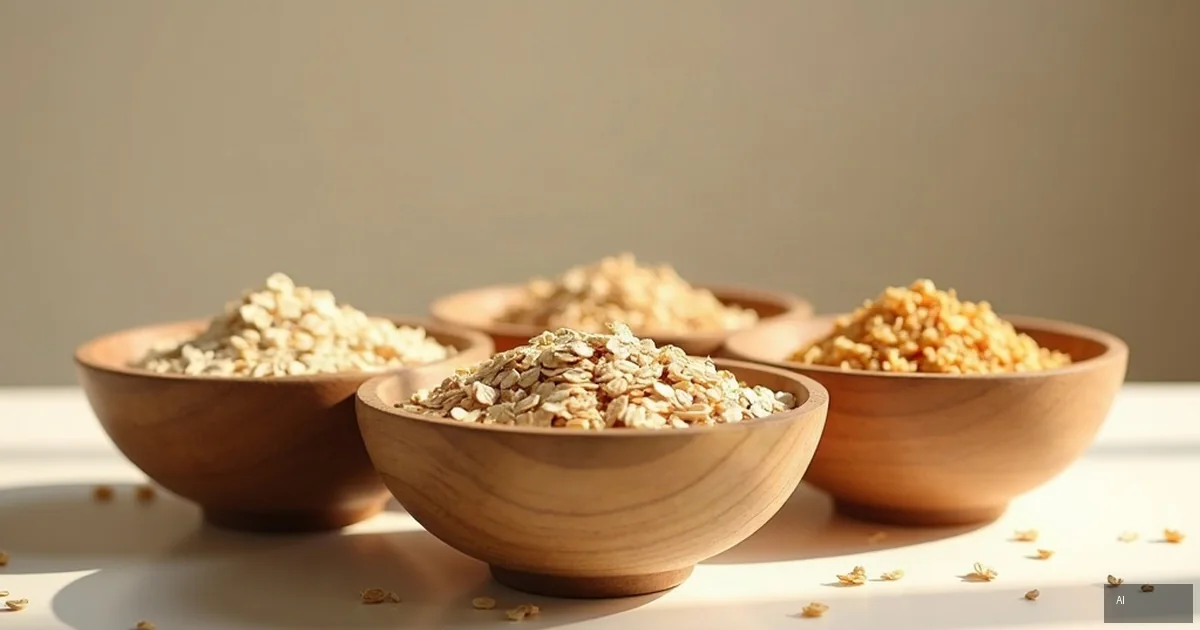
Alternative Flours Comparison
Alternative flours are becoming increasingly popular among athletes: they provide more protein, fiber, and micronutrients than traditional wheat flour. In addition, many of them are naturally gluten-free — suitable for gluten-sensitive athletes.
✅ Athlete's advantage: Almond flour has 21 g protein per 100 g (wheat — 10 g). Coconut flour has 39 g fiber per 100 g. Choose by goal: for protein — almond, for fiber — coconut, for low calories — oat.
📊 Nutritional Value of 8 Alternative Flours (100 g)
| Flour | kcal | Protein | Fiber | Carbs | Gluten-free? | Best for |
|---|---|---|---|---|---|---|
| Almond | 590 | 21 g | 11 g | 20 g | Yes | Baked goods, pancakes |
| Coconut | 443 | 19 g | 39 g | 60 g | Yes | Desserts, buns |
| Oat | 389 | 16 g | 10 g | 66 g | Depends* | Porridge, pancakes, bread |
| Buckwheat | 335 | 13 g | 10 g | 71 g | Yes | Pancakes, flatbreads |
| Quinoa | 368 | 14 g | 7 g | 64 g | Yes | Bread, buns |
| Rice | 366 | 6 g | 2 g | 80 g | Yes | Flatbreads, baked goods |
| Sorghum | 359 | 8 g | 7 g | 75 g | Yes | Flatbreads, buns |
| Spelt | 338 | 15 g | 11 g | 70 g | No | Bread, buns |
🥜 Almond Flour — Protein Champion
Almond flour is made from blanched ground almonds. It is an excellent choice for athletes who want to increase protein and healthy fat content in baked goods. 100 g provides 21 g protein and 11 g fiber.
- Vitamin E: One of the richest sources of vitamin E among flours — a powerful antioxidant.
- Low in carbohydrates: Only 20 g carbohydrates per 100 g (wheat — 76 g) — ideal for keto and low-carbohydrate diets.
- Magnesium: 268 mg magnesium per 100 g — helps muscle function and recovery.
🛒 Recommended Products
🌱 Plant Proteins💪 Whey Protein🥗 Superfood🍳 Healthy Recipes💊 Multivitamins
❓ Frequently Asked Questions
Are alternative flours suitable for baking?
Yes, but recipes need adjustment. Almond and coconut flours absorb more liquid — additional eggs are often needed. It is best to mix several alternative flours (e.g., almond + coconut + tapioca) for better texture.