🍽️ Calorie Density
Why does one food keep you full for a long time, while another does not? The answer is usually calorie density.
What Is Calorie Density?
Calorie density is how much energy (kcal) is in one gram of food. It is calculated simply: kcal / 100 g. The lower the number, the larger the amount of food you can eat for the same calories — so it is more filling and it is easier to eat less.
Water and fiber have no calories but take up volume — so vegetables, fruits and lean proteins are much more filling than oil, nuts or sweets, which have many calories and little volume.
📊 Calorie Density Table (approximate, kcal / 100 g)
| Low (0–70) | Medium (70–200) | High (200+) |
|---|---|---|
| Cucumbers ~15 | Cooked pasta ~130 | Bread ~250 |
| Lettuce ~20 | Cooked rice ~130 | Cheese ~350 |
| Tomatoes ~20 | Eggs ~140 | Chocolate ~550 |
| Strawberries ~30 | Chicken (breast) ~165 | Nuts ~600 |
| Broccoli ~35 | Kefir ~60 | Oil ~900 |
| Watermelon ~30 | Chicken thigh ~190 | Chips ~520 |
Values depend on the product and preparation method — you can find approximate calorie amounts for your food in the food calorie search, and your daily target — in the daily calorie tool.
🎯 Why It Matters When Losing Weight
When losing weight, you need fewer calories, but hunger does not decrease. So the winner is the one who can “satisfy” hunger with fewer calories. Low-density food allows you to:
- eat a larger portion and feel that you have really eaten;
- feel full for longer because the stomach is fuller (volume + water + fiber);
- eat more often, if that makes it easier to stick to the plan.
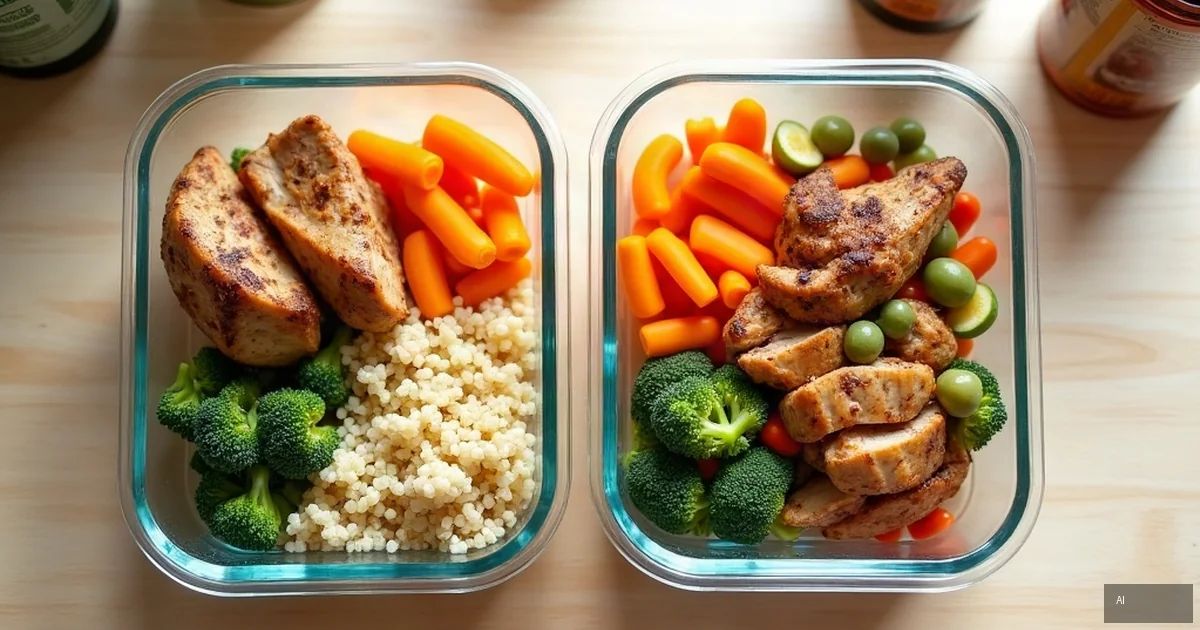
And vice versa: 50 g of nuts (300 kcal) is about as filling as a large plate of vegetables with lean chicken (300 kcal) — the only difference is that you will not eat two of the second plate.
✅ How to Reduce Calorie Density in Practice
- Add Vegetables to Every Meal — replace half the pasta with zucchini, increase the vegetable part of the stew.
- Choose Lean Proteins — chicken breast, lean fish, cottage cheese, beans.
- Boiling Instead of Deep-Frying — deep-fried chicken can have almost twice as many calories (see cooking methods).
- Sauces on the Side — 1 tablespoon of oil is ~120 kcal, and you often do not even notice it.
- Water-Rich Fruits Instead of Dry Sweets — watermelon, strawberries, melon.
- Soups and Stews — the same ingredients, but with water that adds volume.
⚠️ Common Mistakes
- “Healthy” Does Not Mean Low-Calorie — nuts, avocado and oil are healthy but very dense; they should be measured, not poured freely.
- Dry Food Is Deceptive — dried fruit and granola have little water, so their calorie density is high.
- Drinkable Calorie Sources — juices, lemonades, coffee with syrups do not satiate, but they contain many calories.
- Low Density Alone — if you eat only salads, you will lack protein and fat, and your health will suffer.
🙋 Frequently Asked Questions
Is Low Calorie Density Always Better? No. If you exercise, want to gain weight, or train hard, you also need dense foods (nuts, oil, avocado) — it is important that they match your goal.
Where to Find Calories for Specific Products? In the calorie search — enter a product and you will see its calorie content.
Is Calorie Density the Same as Glycemic Index? No, these are separate things — density shows calories per gram, while glycemic index shows the effect on blood sugar.