Is a Paper Food Diary Still Better Than an App?
Although apps (MyFitnessPal, Cronometer) are convenient, a paper diary has unique advantages that technology cannot replicate:
🧠 Deeper Awareness
Handwriting activates different areas of the brain than tapping on a phone. You remember better what you ate — there is data showing better recall.
👀 No Screen
Before bed — no blue light. During meals — no phone. Full attention to food (mindful eating).
📊 Visual Progress
A week’s view on one page. You see trends that an app does not show: “Oh, I’ve been short on vegetables all week” or “Every evening I overeat nuts.”
🎯 No Ads
No pop-ups, premium versions, or notifications. Pure focus on the goal.
📋 Free Printable Template — What’s Included
Our diary template is designed specifically for athletes and includes:
- 📅 Weekly Page: A 7-day format on one A4 page. For each day — 5 meal rows with columns: time, food, amount, kcal, P, C, F.
- 💧 Water and Sleep Section: Separate boxes to mark glasses of water (8 per day) and hours of sleep.
- 🏋️ Training Block: Fields for training type, duration, intensity (1-10), and notes.
- 😊 Well-being Scale: Energy (1-10), hunger (1-10), digestion (good/moderate/poor), mood (😊 😐 😞).
- 📈 Weekly Summary: Average daily calories, protein, carbohydrates, fats; weight change; best/worst day.
- 🎯 Goals Reminder: Space at the top to write down weekly goals: “Reach 160g of protein daily,” “Don’t eat after 21:00.”
📝 How to Fill Out the Diary Effectively
- Fill it in IMMEDIATELY after a meal: Not in the evening. After 5 min, you will already forget exact amounts. Keep the diary on the kitchen table or next to your workspace.
- Use a scale for the first 2 weeks: Until you learn to estimate portions “by eye.” After that, you can write approximate amounts.
- Be honest: The diary is for YOU, not for anyone else. If you ate 5 cookies — write 5. Only honesty gives results.
- Write down the CONTEXT: Not just WHAT, but also WHY. “I ate pizza because I was tired after work” or “I snacked while watching TV.” Context reveals patterns.
- Review on the weekend: On Sunday evening, set aside 10 min to review the week’s entries. What trends do you see? What can you improve next week?
🖨️ Downloading and Using the Diary Template
Template in PDF format ready for printing on an A4 sheet. Print it every week and file it in a binder — after 3 months, you will have a complete nutrition history.
💻 Alternative: Digital Diary (Google Sheets Template)
If paper is not for you, we offer a Google Sheets template that you can edit on your phone or computer. Add the template to your Google Drive.
- Automatic Calculations: You enter amounts — formulas automatically calculate calories and macros.
- Charts: Weekly calorie and weight trend charts update automatically.
- Available Everywhere: On your phone, tablet, or computer. Always with you.
🛒 Recommended Supplements
Choose quality supplements to achieve your goals:
🔗 Related Tools
💡 Practical Everyday Tips
Implement these tips gradually — start with one and add another when the first becomes a habit:
- Start with Small Changes: Instead of radical diet changes, start with one improvement per week. Small, consistent changes are believed to be 3x more effective in the long term than drastic overhauls.
- Track progress objectively: Use a diary or app to see real data rather than relying on subjective impressions.
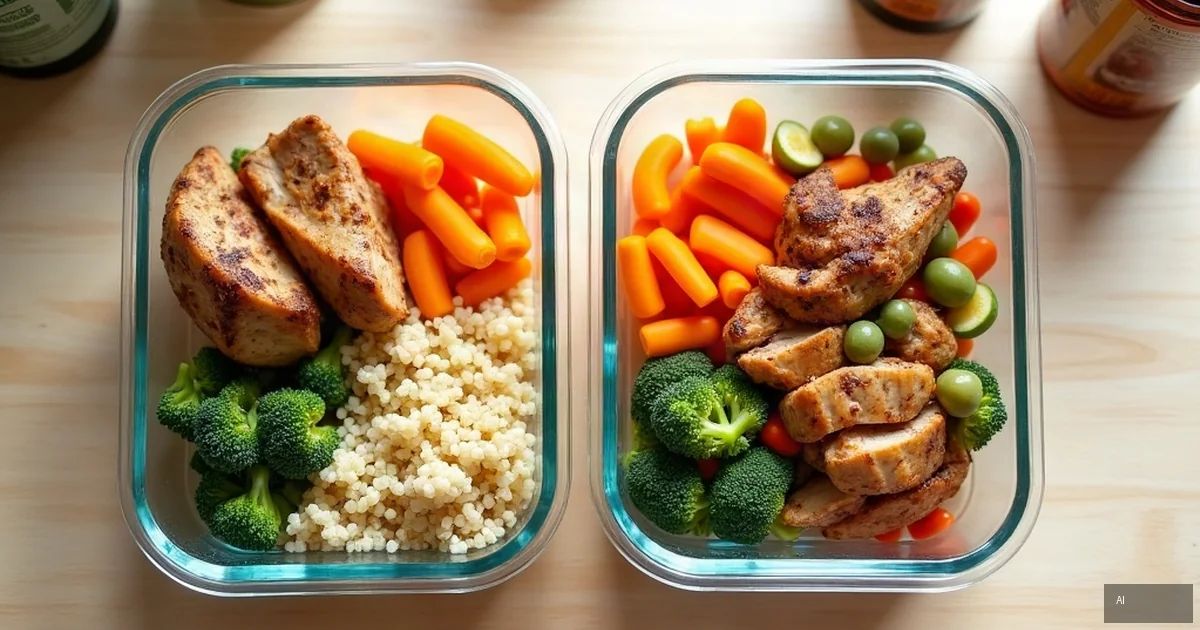
- Create a Supportive Environment: Prepare meals in advance (meal prep), remove trigger foods from home, keep healthy snacks on hand.
- Be Patient: Results do not come overnight. On average, it takes 2-4 weeks to notice significant changes.
⚡ Pro Tips From Experts
Sports nutrition specialists share tips that can fundamentally change your approach:
- 80/20 rule: Give 80% of your attention to the basics (calories, protein, vegetables), and 20% to details (meal timing, supplements). Perfectionism is the biggest enemy of progress.
- Listen to your body: No tests or calculations can replace your body's signals. If you feel bad, something is wrong, even if "according to the numbers" everything is fine.
- Sleep First: No nutrition strategy can compensate for lack of sleep. 7-9 hours of quality sleep is part of the nutrition plan.
- Consistency > Perfectionism: A good 80% plan that you follow 90% of the time is better than a 100% perfect plan that you follow 50% of the time.
🛒 Additional Products for Your Goals
In addition to the main supplements, these products can help you achieve better results:
🧠 Myths and Truth
Let's separate facts from popular myths: