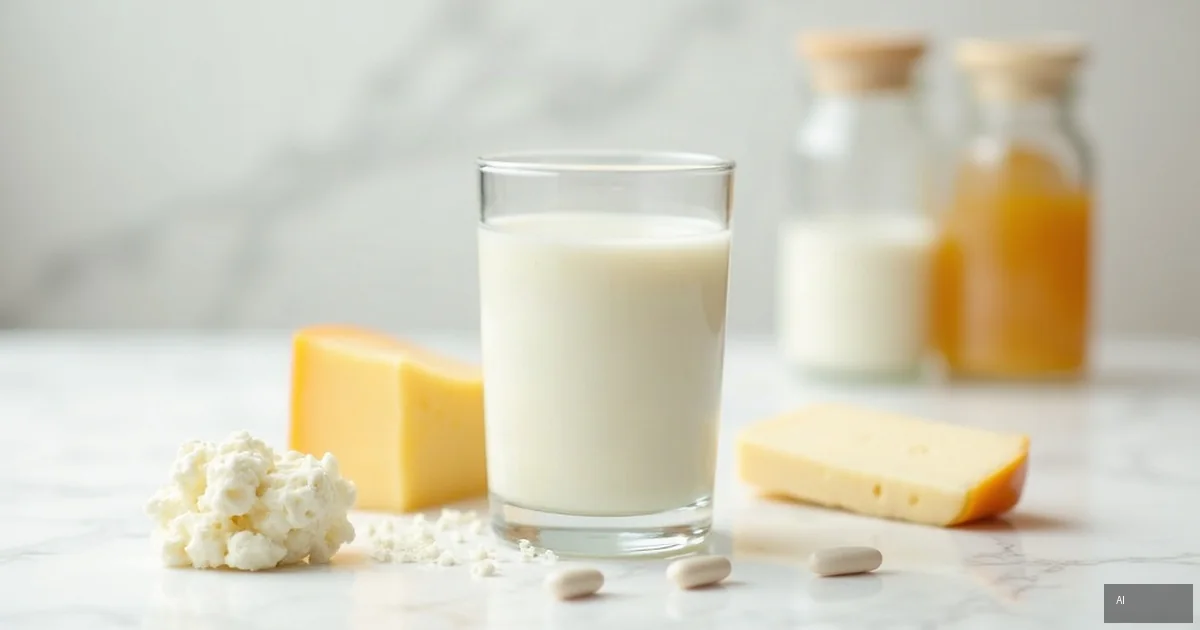
📊 Nutritional Table (100 g)
Below is the detailed nutritional value per 100 grams hard cheese.
| Nutrient | Amount (100 g) | % RDA |
|---|---|---|
| 🔥 Calories (Energy) | 403 kcal | -- |
| 💪 Protein | 25.0 g | -- |
| 🧈 Fats | 33.0 g | -- |
| 🍚 Carbohydrates | 1.3 g | -- |
| 🌾 Fiber | 0 g | -- |
| Calcium | 825 mg | 83% |
| Phosphorus | 500 mg | 71% |
| Vitamin K2 | 45 µg | -- |
| Vitamin B12 | 1.3 µg | 54% |
| Zinc | 3.6 mg | 33% |
* RDA - Recommended Daily Allowance (EU Regulation 1169/2011). Percentages are calculated for an adult. Athletes' needs may be higher.
💪 Benefits for Athletes
Here are the main hard cheese benefits in an athlete's nutrition:
- The highest calcium density among foods
- Vitamin K2 - directs calcium to the bones, not the arteries
- Bioactive peptides - anti-inflammatory effect
- Concentrated - a small portion, many nutrients
🍳 How to Prepare
The best ways to prepare hard cheese, while preserving maximum nutritional value:
- Snack: 30 g with nuts and fruit
- In salads: grated parmesan
- In an omelette: grated cheddar - it melts
⚡ When to Eat?
Snack. Before bed. Before training - 2-3 hours.
🔄 Substitutions and Alternatives
Best alternatives hard cheese:
Cottage cheese, tofu, nutritional yeast, almonds
💡 Tips
- Ripening >6 months - more K2, less lactose
- Parmesan - 35 g protein per 100 g
- Portion: 30 g (matchbox)
- Lactose breaks down during ripening
Why Hard Cheese Is Valued
Hard cheese is a concentrated food: it is high in protein, calcium and fat. This makes it good as a source of protein and calcium, but it is easy to take in too many calories because portions are small and calorie density is high.
📊 Nutritional Value (approximate, 100 g)
| Metric | Hard Cheese | Lighter alternative |
|---|---|---|
| Calories | ~330–400 kcal | ~200–260 kcal |
| Protein | ~25–30 g | ~25–30 g |
| Fat | ~25–33 g | ~10–18 g |
| Calcium | ~600–800 mg | ~600–800 mg |
| Salt | ~1,5–2 g | ~1,5–2 g |
Values vary greatly by type and ripening time — you will find exact figures the calorie search.
✅ How to Combine with Sports Nutrition
- Portion 20–40 g (1–2 slices) usually fits within the daily allowance and provides ~6–10 g of protein.
- For calcium needs cheese is one of the most convenient sources, especially when dairy products are not appealing.
- Fat balance: if your daily diet is already high in fat, choose leaner options.
- Salt: hard cheese is high in sodium — if consumed frequently, it is worth calculating total salt intake.
- Pre-Workout hard cheese is not suitable — too much fat and too long digestion.
💡 How to Replace Regular Cheese
- Hard → cottage cheese/cream cheese — much fewer calories and less fat with a similar amount of protein.
- Grated cheese — you will use less if you grate it finely (it tricks the eye).
- Instead of "cheese sauce" — a sauce with lean yogurt and a small amount of cheese.
- Cheese as a garnish, not as a base — 20 g of cheese will "improve" a sandwich, not 100 g.
🙋 Frequently Asked Questions
Is hard cheese "unhealthy"? No — it is a wholesome food, just calorie-dense; quantity and frequency matter.
Is leaner cheese always better? If the goal is to reduce calories — yes; in terms of taste and satiety, a fattier one may be more beneficial.
Is cheese suitable before bed? A small amount is suitable if you want protein, but too much fat may disrupt sleep.