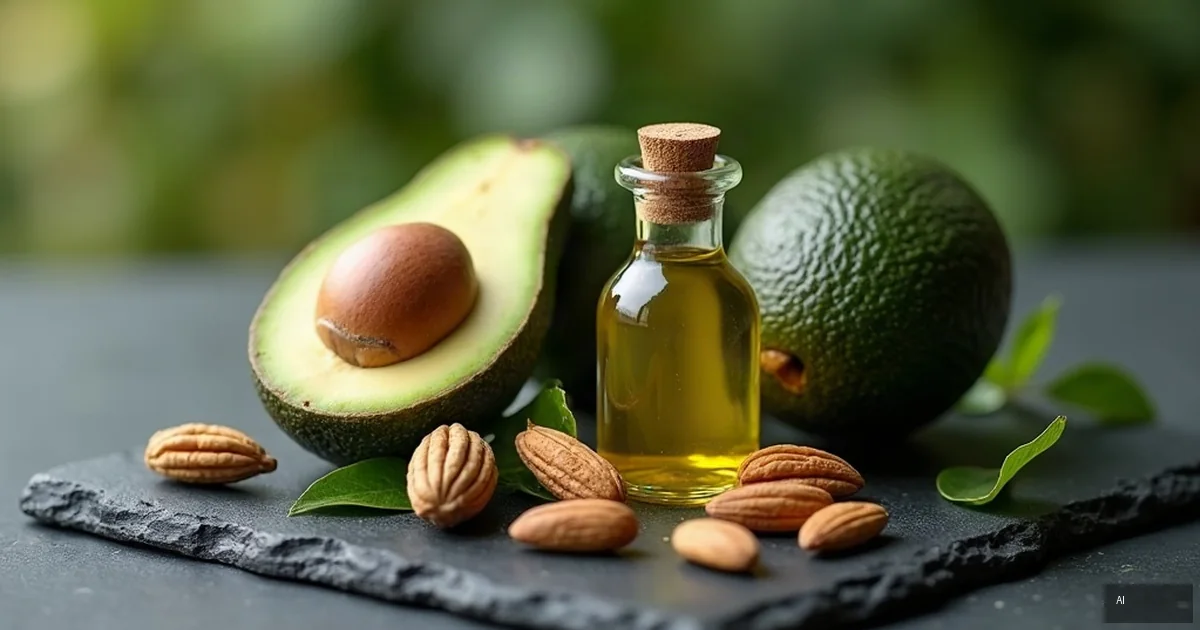
Why Are Fats Essential for Athletes?
Healthy fats are a vital nutrient that athletes often underestimate. Fats provide sustained energy, help absorb fat-soluble vitamins (A, D, E, K), and are essential for hormone production, including testosterone.
Key Functions of Fats in Sport:
- Long-Lasting Energy — during aerobic exercise, the body uses fats as its main energy source (especially at low-to-moderate intensity)
- Hormone Production — testosterone and other anabolic hormones are synthesized from cholesterol
- Joint Protection — omega-3 fatty acids reduce joint inflammation and improve joint flexibility
- Cell Membrane Structure — the membrane of every cell is made of phospholipids (fat derivatives)
- Vitamin Absorption — fats are essential for the absorption of vitamins A, D, E, K
🧬 Omega-3, Omega-6, Omega-9: How Do They Differ?
Omega-3 (Alpha-Linolenic Acid)
Essential Fatty Acids — the body does not produce them, so they must be obtained from food. They reduce inflammation, improve cardiovascular health, and accelerate recovery after training. Main forms: ALA (in plants), EPA and DHA (in fish fat).
Sources: salmon, mackerel, sardines, walnuts, flaxseed, chia seeds, fish oil supplements.
Omega-6 (Linoleic Acid)
Also an essential fatty acid. Important for cell membrane structure and the inflammatory response. However in modern diets, omega-6 is often too high and omega-3 too low. The ideal omega-6:omega-3 ratio should be 1:1 to 4:1 (in modern diets it is often 15:1 or more!).
Sources: sunflower oil, corn oil, soybean oil, margarine.
Omega-9 (Oleic Acid)
A non-essential fatty acid — the body can produce it itself. It helps lower "bad" LDL cholesterol and increase "good" HDL cholesterol.
Sources: olive oil, avocados, almonds, cashews, peanut oil.
🥩 Saturated vs Unsaturated Fats Comparison
| Fat Type | State at room temperature | Health Effect | Sources | Recommendation |
|---|---|---|---|---|
| Unsaturated (mono-) | Liquid | Positive — lowers LDL, increases HDL | Olive oil, avocados, nuts | Consume daily |
| Unsaturated (poly-) | Liquid | Positive — source of omega-3 and omega-6 | Fish, flaxseed, walnuts | Consume daily |
| Trans fats | Solid | Negative — increases LDL, lowers HDL, promotes inflammation | Fried fast-food products, margarine | Avoid |
| Saturated fatty acids | Solid | Mixed — in moderation may be beneficial for testosterone | Meat, butter, coconut oil, dairy fat | In moderation |
🥜 Best Healthy Fat Sources (Table)
| # | Product | Fats (g/100g) | Main Type | Omega-3 (g) | Suitability |
|---|---|---|---|---|---|
| 1 | Salmon (wild) | 13 | Polyunsaturated | 2.5 | Excellent |
| 2 | Avocado | 15 | Monounsaturated | 0.1 | Excellent |
| 3 | Walnuts | 65 | Polyunsaturated | 9.1 | Excellent |
| 4 | Chia Seeds | 31 | Polyunsaturated | 17.8 | Excellent |
| 5 | Flaxseed | 42 | Polyunsaturated | 22.8 | Excellent |
| 6 | Olive oil (EV) | 100 | Monounsaturated | 0.8 | Excellent |
| 7 | Almonds | 50 | Monounsaturated | 0 | Excellent |
| 8 | Mackerel | 18 | Polyunsaturated | 3.0 | Excellent |
| 9 | Eggs (with yolk) | 11 | Mixed | 0.1 | Excellent |
| 10 | Coconut oil | 100 | Saturated | 0 | In moderation |
| 11 | Peanut butter | 50 | Monounsaturated | 0 | Excellent |
| 12 | Sunflower seeds | 51 | Polyunsaturated | 0.1 | Limit (omega-6) |
| 13 | Sardines | 11 | Polyunsaturated | 1.5 | Excellent |
| 14 | Pumpkin seeds | 49 | Polyunsaturated | 0.1 | Excellent |
| 15 | Tofu (firm) | 5 | Polyunsaturated | 0.3 | Excellent |
📐 Fat Dosing Recommendations
| Goal | Fat per day | Omega-3 (EPA+DHA) | Notes |
|---|---|---|---|
| Muscle Gain | 0.8–1.2 g/kg body weight | 2–3 g | Sufficient fat intake is important for testosterone production |
| Weight Loss | 0.6–1.0 g/kg body weight | 1.5–2 g | Healthy fats increase satiety |
| Endurance sport | 1.0–1.5 g/kg body weight | 2–4 g | Fats — the main fuel for long distances |
| Total activity | 0.8–1.0 g/kg body weight | 1–2 g | Balanced omega-3:omega-6 ratio |
🚫 Fat Myths in Sports
❌ Myth: “Fats make you fat; they should be avoided.” ✅ Fact: A calorie surplus makes you fat. Healthy fats are essential for health and athletic performance.
❌ Myth: “Athletes only need protein and carbohydrates.” ✅ Fact: Without fats, hormone production is disrupted, recovery slows down, and injury risk increases.
❌ Myth: “All oils are the same.” ✅ Fact: Different oils have different fatty acid compositions. Choose cold-pressed olive oil and avoid processed vegetable oils.
❌ Myth: “The more omega-3, the better.” ✅ Fact: Excessive omega-3 intake (more than 5 g per day) can thin the blood and increase the risk of bleeding.
🛒 Recommended Supplements
These supplements will complement your healthy fats strategy:
🥘 Fats and Cooking
Not all oils are suitable for cooking. Some oils break down when heated and become harmful.
| Oil | Smoke point | Suitable for cooking? | Recommendation |
|---|---|---|---|
| Avocado oil | 270°C | Yes | Excellent for high-temperature cooking |
| Coconut oil | 177°C (refined 204°C) | Average | Suitable for medium temperatures |
| Olive oil (EV) | 160–190°C | Only low temperature | Better used cold — for salads |
| Butter | 150°C | No | Melts and burns; only suitable when clarified (ghee) |
| Sunflower oil | 227°C | Yes | But high in omega-6 — do not use daily |
🧪 The Role of Cholesterol in Sports
Cholesterol is often demonized, but it is essential for the production of testosterone and other steroid hormones. For athletes, especially strength athletes, sufficient cholesterol intake is important for muscle growth.