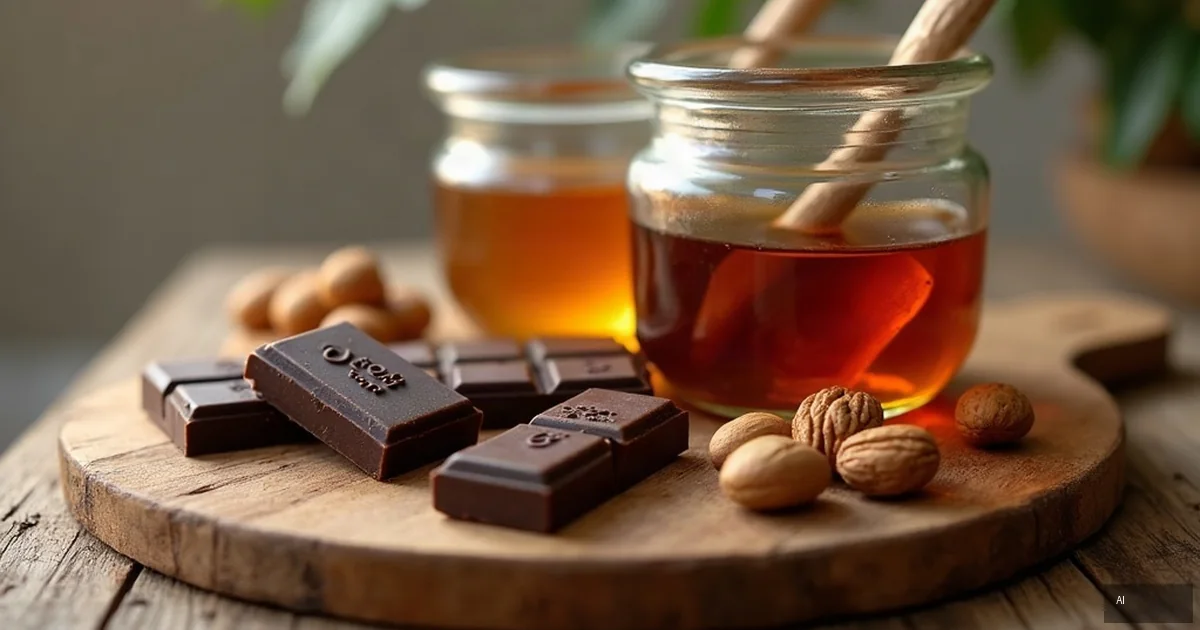
Why Natural Sweeteners Instead of Sugar?
White sugar provides “empty” calories — energy without vitamins, minerals or antioxidants. Natural sweeteners, by contrast, contain additional nutrients, enzymes and bioactive compounds that may improve athletic performance and recovery.
📊 Comparison of Natural Sweeteners
| Sweetener | GI | Kcal/100g | Main Sugar | Minerals | Suitable for Sports? |
|---|---|---|---|---|---|
| White sugar | 65 | 387 | Sucrose | 0 | Only for urgent energy |
| Honey | 58 | 304 | Fructose (38%) + glucose (31%) | Potassium, magnesium, B group | Excellent — before/during/after |
| Maple syrup | 54 | 260 | Sucrose | Manganese, zinc, potassium | Good — before/during |
| Molasses (blackstrap) | 55 | 290 | Sucrose | Iron, calcium, magnesium | Good — after training |
| Coconut sugar | 35 | 375 | Sucrose (+ inulin) | Potassium, magnesium | Occasionally |
| Date syrup | 47 | 270 | Fructose + glucose | Potassium, magnesium, B6 | Excellent — for prolonged exertion |
| Stevia | 0 | 0 | Steviol glycosides | 0 | Calorie-free |
| Monk fruit (Luo Han Guo) | 0 | 0 | Mogrosides | 0 | Calorie-free |
🍯 Honey — Athlete’s Superfood
Honey is one of the most versatile natural sweeteners in sports. Due to its ideal fructose-to-glucose ratio, it provides both a quick energy burst (glucose) and sustained energy (fructose, metabolized in the liver).
Using honey by training phase:
⏰ 30 min before training
1–2 tbsp honey (20–40 g carbohydrates). Provides quick energy without an insulin spike (lower GI than sugar). Especially suitable for morning training on an empty stomach.
🏃 During prolonged exertion
Honey gel: 2 tbsp honey + a pinch of salt + water. A natural energy gel without artificial additives! Consume every 30–45 min in endurance sports.
🔄 After training
1 tbsp honey + protein shake. Honey quickly replenishes glycogen stores, and together with protein stimulates an insulin response that improves amino acid uptake.
🌙 Before bed
1 tsp honey in warm milk/tea. Honey maintains liver glycogen levels overnight and improves sleep quality (tryptophan → melatonin pathway).
🍁 Other Natural Sweeteners in Sports
🍁 Maple Syrup
Rich in manganese (important for bones and carbohydrate metabolism) and zinc (for immunity, testosterone). Excellent for pre-workout pancakes, energy bars, marinades. One tablespoon contains ~13 g carbohydrates, 52 kcal.
🟤 Molasses (Blackstrap)
A by-product of sugar production, paradoxically — much healthier than sugar itself! Rich in iron (1 tbsp = 20% RDI), calcium (10% RDI), magnesium. Excellent after training — replenishes minerals lost through sweat. The taste is rich, caramel-like.
🌴 Date Syrup
Made simply from dates — no additives. High in potassium (twice as much as a banana), magnesium, B6. An excellent energy source for endurance sports. 1 tbsp = 15 g carbohydrates.
🍃 Calorie-Free Natural Sweeteners
🌿 Stevia
200–300 times sweeter than sugar, 0 calories, GI = 0. Natural — from the Stevia rebaudiana plant. Suitable for a keto diet and weight loss. Does not raise insulin. Can be used in baked goods and drinks.
🍈 Monk Fruit (Luo Han Guo)
150–250 times sweeter than sugar. Contains antioxidants (mogrosides) that may reduce post-workout inflammation. No aftertaste, unlike stevia.
🍬 Erythritol
Sugar alcohol from fruit. 0.24 kcal/g, GI = 0. Does not cause digestive issues like xylitol. 70% of the sweetness of sugar. Perfect for baking — caramelizes similarly to sugar.
🌾 Inulin (Chicory)
Prebiotic — feeds beneficial gut bacteria. Mildly sweet, soluble. Improves calcium and magnesium absorption. Excellent addition to protein shakes.
🔬 Impact of Sweeteners on Sports Performance
| Situation | Best Sweetener | Amount | Why |
|---|---|---|---|
| Before strength training | Honey | 15–30 g (1–2 tbsp) | Medium GI, quick energy, antioxidants |
| During long endurance exercise | Honey + salt (gel) | 30–60 g/hr | Glucose + fructose = dual energy pathway |
| After Training | Honey or date syrup | 15–30 g with protein | Insulin response, glycogen replenishment |
| Keto / low-carb | Stevia, monk fruit, erythritol | To taste | 0 kcal, 0 GI, does not affect ketosis |
| Weight Loss | Stevia, monk fruit | To taste | 0 kcal, helps reduce sugar intake |