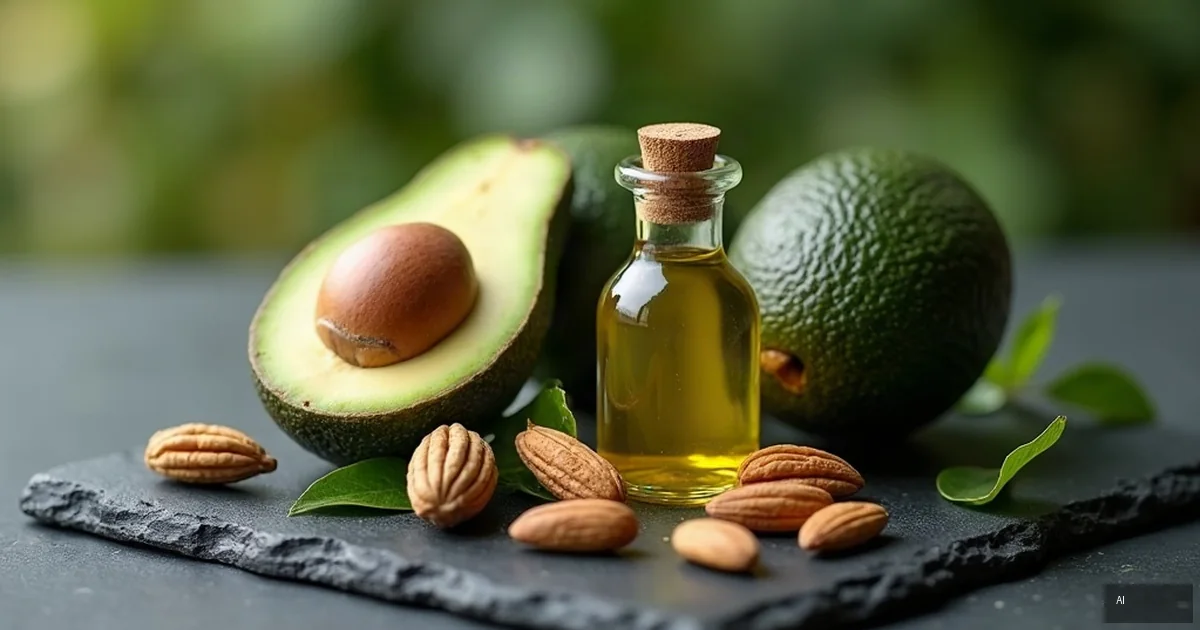
📊 Avocado Nutritional Value
Avocado is a unique fruit — it is rich in healthy fats (mostly monounsaturated, like in olive oil) and very low in sugar. It has more potassium than a banana, as well as vitamins E, K, B group and fiber. One medium avocado (150 g) provides ~240 kcal.
| Nutritional Value (100 g) | Amount |
|---|---|
| Calories (kcal) | 160 kcal |
| Protein | 2 g |
| Fat | 15 g |
| Carbohydrates | 9 g |
| Monounsaturated fatty acids | 10 g |
| Potassium | 485 mg (more than in a banana!) |
| Vitamin E | 2.1 mg (14% RDA) |
| Fiber | 6.7 g |
| Folic acid | 81 µg (20% RDA) |
💪 Benefits for Athletes
🧬 Fats for Hormone Production
Testosterone and other steroid hormones are produced from cholesterol, whose synthesis requires healthy fats. Diets with too low fat intake (<15% of calories) can affect testosterone levels. Avocado is one of the best sources of healthy fats.
🦴 Joint Health
The monounsaturated fats and vitamin E in avocado reduce inflammation in joints. Avocado and soy extract (ASU) is used to treat arthritis symptoms. For athletes, this means healthier joints.
💪 Potassium — More Than in a Banana
485 mg of potassium per 100 g — that's more than in a banana (358 mg)! Potassium is a critically important electrolyte for muscle contraction, nerve signal transmission, and blood pressure regulation.
🥗 Absorption of Fat-Soluble Vitamins
The fats in avocado help absorb vitamins A, D, E, and K from other foods. By adding avocado to salads, you will increase carotenoid absorption 4–12 times!
🥑 How to Include in Your Diet
A ripe avocado should be slightly soft when pressed (like a ripe pear). If it is too hard, leave it at room temperature for 2–3 days. If it is too soft with dark spots — it is already overripe. Keep only ripe ones in the refrigerator.
- For breakfast: Half an avocado with eggs on whole-grain toast. Protein + healthy fats + carbohydrates.
- After the workout: Avocado mixed into tuna or chicken salads. Improves absorption of fat-soluble vitamins.
- Smoothie: A quarter of an avocado gives a smoothie creaminess and healthy fats without a strong taste.
- Snack: Half an avocado with salt, pepper, and lemon juice. A filling snack that maintains energy for 3+ hours.
💡 Avocado trick: Want your avocado to ripen faster? Put it in a paper bag with a banana or an apple. Fruits release ethylene — a gas that speeds up ripening. It will be ripe in 1–2 days.
🍽️ Recipe Ideas
- Guacamole: Mash the avocado with lemon juice, chopped onion, tomatoes, cilantro, and salt. Eat with vegetables or whole-grain crackers.
- Avocado and egg 'boats': Crack an egg into half an avocado, bake in the oven at 180°C for 12–15 min. Protein + fats in one.
- Avocado and tuna salad: Mix tuna with avocado (instead of mayonnaise), lemon juice, and seasonings. Twice as healthy.
❓ FAQ
Doesn't avocado have too many calories?
Avocado is calorie-dense (160 kcal/100g), but these are 'good' calories from healthy fats. Half an avocado (120 kcal) is an optimal portion. Fats provide a long-lasting feeling of fullness, so they can actually help control appetite.
Does avocado help with weight loss?
There is conflicting data. One is data that people who eat avocados have a lower BMI and waist circumference. Another is that avocado can help you feel fuller after a meal. However, the most important thing is the overall calorie balance.
How to keep a cut avocado fresh?
Leave the pit in the half you want to keep. Sprinkle with lemon juice, wrap tightly in plastic wrap, and keep in the refrigerator. This way it will stay fresh for 1–2 days.
🛒 Sports Supplements for Your Goals
🏆 Athlete Nutrition Principles
🥩 Protein
Consume 1.6–2.2 g/kg body weight per day for muscle growth and recovery. Distribute protein evenly across 3–5 meals.
🍚 Carbohydrates
The main energy source for intense training. 3–7 g/kg depending on the sport and intensity.
🧈 Fats
Healthy fats from nuts, fish, avocados — for hormone production and joint health. 0.8–1.2 g/kg per day.
💧 Hydration
Drink 30–40 ml of water per 1 kg of body weight. During training, additionally 500–1000 ml per hour with electrolytes.
💊 Sports Supplement Usage Guide
| Supplement | Purpose | Dose | When to take |
|---|---|---|---|
| Whey protein | Muscle Recovery and Growth | 25–30 g | After training, in the morning |
| Creatine Monohydrate | Strength, explosive power | 5 g per day | At any time, consistently |
| Omega-3 | Reducing inflammation, heart health | 1–3 g EPA/DHA | With food |
| Vitamin D3 | Bone health, immunity, testosterone | 2000–4000 IU | With a fatty meal |
| Magnesium | Muscle Relaxation, Sleep | 300–400 mg | Before Sleep |
| BCAA/EAA | Amino acid supplementation | 5–10 g | Before/during/after training |
🔄 Recovery Protocol
- Post-Workout Nutrition: Within 30–60 min after physical exertion, consume 20–40 g protein + 40–60 g carbohydrates for muscle glycogen restoration.
- Sleep: 7–9 hours of quality sleep. During sleep, growth hormone is released and muscle tissue recovery occurs.
- Active Rest: Light activity (walking, stretching, yoga) on rest days improves circulation and reduces muscle soreness.
- Contrast Shower: Alternating cold/warm water after intense training reduces inflammation and accelerates recovery.
- Massage / foam rolling: Myofascial release improves muscle elasticity and reduces the risk of injury.
🏥 Injury Prevention in Sports
- Warm-Up: 10–15 min dynamic warm-up before every workout — raising muscle temperature.
- Stretching: Dynamic before training, static after training. Never stretch cold muscles.
- Progressive overload: Increase the load by no more than 10% per week. Progressing too fast = a recipe for injury.
- Proper Technique: Poor exercise technique is the most common cause of injuries in the gym.
- Equipment: Proper footwear, protective equipment, and sportswear suited to the sport.
- Rest: Muscles need 48–72 hours for full recovery after intense training.
- Body Signals: Pain is not a sign of weakness. Distinguish muscle fatigue from injury pain.