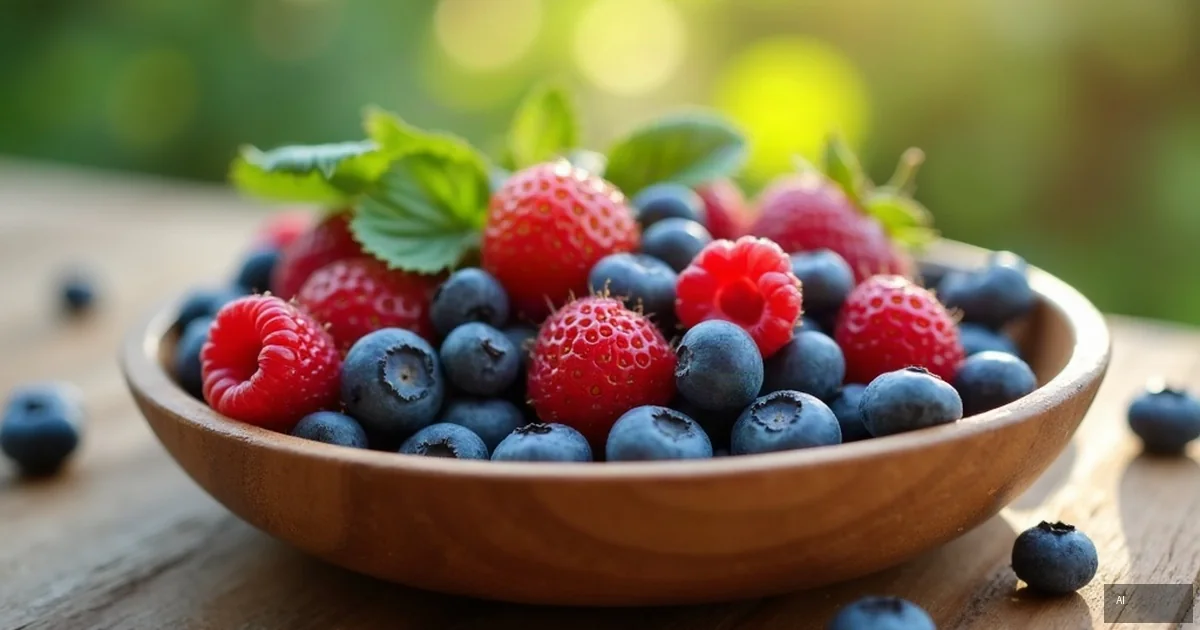
📊 Nutritional Value of Berries
Berries (bilberries, raspberries, strawberries, blueberries, blackberries) are the most nutrient-dense fruits in the world per calorie. Their main 'superpower' is anthocyanins, flavonoids that give intense color and have a powerful antioxidant and anti-inflammatory effect. It is believed that consuming berries after training significantly accelerates muscle recovery.
| Nutritional Value (100 g) | Amount |
|---|---|
| Calories (kcal) | 57 kcal |
| Protein | 0.7 g |
| Fat | 0.3 g |
| Carbohydrates | 14 g |
| Anthocyanins | ~200–500 mg |
| Vitamin C | 9.7–58 mg |
| Fiber | 2.4–6.5 g |
| Polyphenols | ~500 mg |
| Calories | Very low (32–57 kcal) |
💪 Benefits for Athletes
🔥 Accelerated Muscle Recovery
In 2012, there is evidence that bilberry consumption before and after training reduced markers of muscle damage (CK) by 30% and accelerated strength recovery within 24 hours. Anthocyanins neutralize free radicals generated during intense physical exertion.
🛡️ Inflammation Reduction
Anthocyanins in berries block the COX-2 enzyme — the same one blocked by ibuprofen, but more safely and without side effects. Regular consumption of berries reduces systemic inflammation and chronic muscle soreness.
🧠 Cognitive Function
There is evidence that berry flavonoids improve cerebral blood flow, memory and concentration. For athletes, this means better reaction, strategic thinking and decision-making during competition.
🦠 Prebiotic Fiber
The fiber in berries nourishes the gut microbiota. Healthy microbiota improves immunity and nutrient absorption — important for athletes who consume large amounts of food and supplements.
🫐 How to Include in Your Diet
Fresh berries are the best choice, but frozen (without added sugar) are almost as nutritious and often cheaper. Dried berries have a higher sugar concentration, so limit portions to 30 g.
- Before training: A handful of berries + Greek yogurt. Antioxidants for protection + protein. Light and quick.
- After the workout: Berry smoothie with whey protein. Antioxidants reduce muscle damage, protein restores.
- For breakfast: Oatmeal with a handful of berries and chia seeds. An antioxidant- and omega-3-rich breakfast.
- Snack: Frozen berries — natural sugar-free 'candies'. A refreshing summer snack after training.
💡 Research-based tip: A double portion of berries the day before competition and immediately after can significantly accelerate recovery. A 2019 meta-analysis confirmed that berry polyphenols effectively reduce markers of muscle damage after intense physical exertion.
🍽️ Recipe Ideas
- Recovery smoothie: 1 cup mixed berries (frozen) + 1 scoop whey protein + 200 ml kefir. Probiotics + antioxidants + protein.
- Berry and chia pudding: Mix chia seeds with almond milk, leave overnight. In the morning, top with fresh berries. Omega-3 + antioxidants.
- Berry oat bars: Mix oats, berries, nut butter and honey. Bake at 180°C for 15 min. Sugar-free, full of antioxidants.
❓ FAQ
Which Berries Are Most Beneficial?
All berries are beneficial, but dark-colored ones (bilberries, blueberries, blackberries) have the most anthocyanins. Strawberries have the most vitamin C. Raspberries — the most fiber. Eat a variety — each type has a unique antioxidant profile.
Are Frozen Berries Just as Beneficial?
Yes! The freezing process preserves 90–95% of antioxidants. Sometimes frozen berries are even more nutritious because they are picked ripe and frozen immediately, while 'fresh' ones may be picked unripe and transported for a long time.
How Many Berries per Day?
At least 1 cup (150 g) of berries per day is recommended. For athletes, especially during periods of intense training, 2 cups may provide additional antioxidant protection. Berries are low in calories, so a larger amount is not a problem.
🛒 Sports Supplements for Your Goals
🏆 Athlete Nutrition Principles
🥩 Protein
Consume 1.6–2.2 g/kg body weight per day for muscle growth and recovery. Distribute protein evenly across 3–5 meals.
🍚 Carbohydrates
The main energy source for intense training. 3–7 g/kg depending on the sport and intensity.
🧈 Fats
Healthy fats from nuts, fish, avocados — for hormone production and joint health. 0.8–1.2 g/kg per day.
💧 Hydration
Drink 30–40 ml of water per 1 kg of body weight. During training, additionally 500–1000 ml per hour with electrolytes.
💊 Sports Supplement Usage Guide
| Supplement | Purpose | Dose | When to take |
|---|---|---|---|
| Whey protein | Muscle Recovery and Growth | 25–30 g | After training, in the morning |
| Creatine Monohydrate | Strength, explosive power | 5 g per day | At any time, consistently |
| Omega-3 | Reducing inflammation, heart health | 1–3 g EPA/DHA | With food |
| Vitamin D3 | Bone health, immunity, testosterone | 2000–4000 IU | With a fatty meal |
| Magnesium | Muscle Relaxation, Sleep | 300–400 mg | Before Sleep |
| BCAA/EAA | Amino acid supplementation | 5–10 g | Before/during/after training |
🔄 Recovery Protocol
- Post-Workout Nutrition: Within 30–60 min after physical exertion, consume 20–40 g protein + 40–60 g carbohydrates for muscle glycogen restoration.
- Sleep: 7–9 hours of quality sleep. During sleep, growth hormone is released and muscle tissue recovery occurs.
- Active Rest: Light activity (walking, stretching, yoga) on rest days improves circulation and reduces muscle soreness.
- Contrast Shower: Alternating cold/warm water after intense training reduces inflammation and accelerates recovery.
- Massage / foam rolling: Myofascial release improves muscle elasticity and reduces the risk of injury.
🏥 Injury Prevention in Sports
- Warm-Up: 10–15 min dynamic warm-up before every workout — raising muscle temperature.
- Stretching: Dynamic before training, static after training. Never stretch cold muscles.
- Progressive overload: Increase the load by no more than 10% per week. Progressing too fast = a recipe for injury.
- Proper Technique: Poor exercise technique is the most common cause of injuries in the gym.
- Equipment: Proper footwear, protective equipment, and sportswear suited to the sport.
- Rest: Muscles need 48–72 hours for full recovery after intense training.
- Body Signals: Pain is not a sign of weakness. Distinguish muscle fatigue from injury pain.